
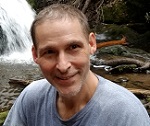
 Hi, I’m Kirby. I need to fess up immediately – in my 20s, 30s, and 40s, I lived a life of very unhealthy habits. My nutrition was made of fried foods, highly processed meals, and too many adult beverages. Physical fitness was non-existent. And my emotional health was in the dirt. Why? Because I was always feeling guilty about how I looked and, ironically, not living with healthy habits. With help, motivation, and time, I was able to transform those unhealthy habits into healthy habits.
Today I’m where I want to be from an overall health standpoint. I now live a lifestyle of healthy habits when it comes to nutrition and fitness. It wasn’t easy to transform those unhealthy habits into good ones. And I had a lot of help and a good supporting cast (my wife Sandy). It also took a lot of research separating fact from marketing-driven fiction (sports drinks come immediately to mind).
More about me and my journey in a moment. But first…
When I graduated from Purdue University the first time with a Bachelor of Science in mechanical engineering, I was anxious to start an engineering career. Sandy and I were married, and we moved to Michigan for my “dream job.” At least I thought it was. I worked in a nuclear power plant and was responsible for making sure our safety systems were always ready to respond.
The position required a lot of hours (some weeks were upward of 90-hour work weeks). It was also a high-stress position and work environment. The consequences of screwing up were, of course, huge. And you didn’t want to be the one to delay a startup after an outage.
Our first of two daughters was born. That was, of course, a joyous occasion, but then time became an even more precious commodity. It wasn’t long before Sandy suggested that maybe we consider graduate school. That was a drastic change in our lives, and it seemed that was exactly what we needed.
I was accepted to Michigan Tech’s Master of Science in Mechanical Engineering program. We moved to the upper peninsula of Michigan with all our belongings, and a 4-month old daughter. Those were our homesteading years. We went from processed or fired meals to being fundamentally healthy. We hiked and we cut up firewood by the truckload. Our meals were amazingly simple and were mostly assembled from raw products. We made our own bread, applesauce from locally picked wild apple orchards, and home-raised (our home) chicken. The stress level went down, and the weight started falling off. We both were about as healthy as we could be. Our unhealthy habits had been broken!
We returned to Purdue for a doctorate, and then moved to Kansas State University for a faculty position. And that’s where the wheels really fell off the “healthy habit” wagon.
Dr. Wall, our family doctor, prescribed this and that pill to keep the medical issues under control. That’s when it hit me that I could use meds to counter the unhealthy habits. And that meant I could continue the unhealthy nutrition and fitness habits with abandon! Modern medicine was fantastic!
So now, in my 40s, I traded any kind of physical activity for sitting on our deck enjoying an adult beverage. I ate and drank whatever I wanted because that handful of pills I took each day would keep me “healthy.”
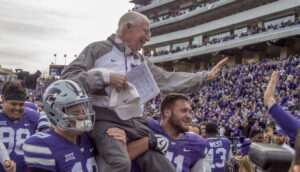
For years, Sandy and I had season tickets to Kansas State home football games. We arrived 5 hours prior to kickoff and tailgated. Then we’d head into the game. Our seats were near the 40 yard line and were in the second row of the upper deck – really great seats!
One game day, as we walked the quarter mile or so to the stadium entrance from our tailgate, I started getting a little winded. We made it to the stadium entrance and started climbing the stairs to the second deck. I had to rest part way up. Finally made it to our seats. At halftime, we typically return to our tailgate with our friends, and then hike back to the stadium for the second half.
That day I made my first excuse for not doing something because of my poor physical condition. I told Sandy I’d stay at the tailgate and tend to the grill. No one needed to actually do that, but my mind did not want to hike up those stairs again. So, I invented excuses, and in the process gave up watching the rest of the game with Sandy. The reality was that I had effectively just given up watching football games in person – something we had done for years – together. And for some reason, I was okay with that. I preferred to continue my unhealthy habits over other activities I enjoyed.
Dr. Wall was our family doctor. During my 49-year-old annual physical, he noted that I continued to gain weight, and was now about 80 pounds overweight. All the health-markers (blood pressure, cholesterol, blood sugar, liver enzymes, etc) were inching up. To counteract those increases, Dr. Wall increased my medication doses. He recommended a liver biopsy to make sure nothing was seriously wrong with my liver, as opposed to just a fatty liver (not that a fatty liver is a good thing!).
Dr. Wall asked me if I planned to change my unhealthy habits to control my weight. I confidently said “nope, I’ll just take medications to counter whatever health effects come with the weight. That way I can eat and drink whatever I want.” His response knocked me back into my chair.
His response: “Then we’ll have to change the way we’re treating you. You’re right, in that I can prescribe drugs to keep your blood markers in check. But because of your lack of fitness and extra weight, your knees will start to fail before you’re 60. You’ll be taking insulin shots by then to control your blood sugar. And there’s still the issue of your liver enzymes being out of range. You’ll be using a walker by the time you’re 60. Are you really ready for that life? Because I will keep you alive long beyond 60. You just won’t enjoy it very much.”
Okay, that got my attention.
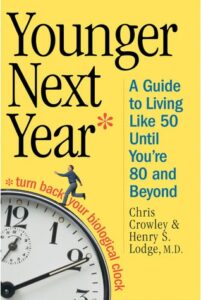
Not only did Dr. Wall get my attention on overall health, but I was sacrificing things I loved to do because of poor healthy habits. And obesity and low energy that came from those habits. Sandy and I talked about it. We read the first edition of a book that a wonderful friend recommended – Younger Next Year: Live Strong, Fit, Sexy, and Smart―Until You’re 80 and Beyond. The link is to an updated 2019 version so isn’t quite the same as the version we read. The newer edition adds some material on cognition and brain health. It’s written by Dr. Henry (Harry) Lodge, an internist and professor at Columbia who provides the science, and Chris Crowley, who provides the motivation behind the book. In the 2019 edition, Dr. Allan Hamilton stepped in for the cognition and brain health portions of the book.
You must admit, that’s an extremely catchy title for a book! And it’s more than catchy. It’s a good book to read, and it was just another domino to fall in the game to change my unhealthy habits into healthy habits.

Dr. Lodge had some remarkably simple lifestyle rules that are worth repeating – they definitely made an impact on me. These rules are:
- Exercise six days a week for the rest of your life
- Do serious aerobic exercise four days a week for the rest of your life
- Do serious strength training, with weights, two days a week for the rest of your life
- Spend less than you make (this isn’t a typical healthy lifestyle rule, but I like it)
- Quit eating garbage
- Care (about things)
- Connect and commit
These are powerful statements, and we took them to heart. The main message we took from the book is that we simply need to be physically active in a brisk way for 45 minutes a day, 5 or 6 days a week. And of course, pay attention to our nutrition – fruits and veggies, lean protein, healthy fats – you get the idea. We thought we could get our heads around the physical activity portion, but the nutrition part – we weren’t ready for that commitment. We enjoyed what we ate and drank a little too much!
Before leaving this part of the story, I need to tell you that Dr. Lodge died in 2017 at the age of 58. He died of an extremely aggressive prostate cancer. While the prognosis for most prostate cancers is positive, his version was very lethal. He left an indelible mark on society and offered a genuine path to an active lifestyle well into our golden years. There’s a point to this that I now realize. And that point is we can all step on a proverbial landmine…
If we take care of ourselves and live a healthy lifestyle with proper exercise and nutrition, there’s no reason why we must be “old” in our 60s, 70s, 80s, and beyond. One might ask: if Dr. Lodge lived such a healthy life, then how did he die early?
What I realize today is that “stuff happens.” I could live the healthiest life possible and have a stroke that kills me tomorrow. Or I can get aggressive pancreatic cancer and die in 2 months. These things happen, but for most of us, those things will not happen. There’s always a risk of dying “early” from something. But a lifestyle based on healthy habits significantly lowers the risk of those things happening. Dr. Lodge stepped on a scarce landmine. But that doesn’t happen to everyone, and interestingly that’s a key point in his book.
I started to embrace risk management. I learned how to assess risk by looking at the possible failure modes (heart attack, cancers, liver failure, dementia to name a few). Once we know the failure modes (we all do – we just don’t want to acknowledge them), then we can take actions to reduce the risk, especially the ones that will kill us or put us in a wheelchair. There’s always a risk of something bad happening, and there’s no such thing, when it comes to health, of zero risk.
So… accept the fact, without fear, that something could happen. But again, for most of us, those things won’t happen. Especially if we live a lifestyle of healthy habits.
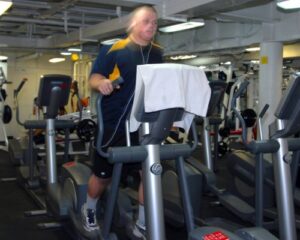
I set a goal of dropping 70 pounds and being able to get off the medications. Sandy signed us up at the gym just around the corner from our research lab. That meant it was incredibly convenient. We started every day of the work week at the gym for an hour. All I did was walk briskly on a treadmill for 45 minutes five days a week. I didn’t change anything else about my life – I really liked eating and drinking what I wanted!
But going to the gym was a huge change in my lifestyle. I knew that I wasn’t going to enjoy the rest of my life if I didn’t make that change. And that was enough motivation for me.
By increasing physical activity, I changed my body’s energy balance. What is this? We explain the body energy balance, or BEB, in the nutrition section. But for now, it’s a simple matter that by increasing my activity, I was now using more energy than I consumed. When this happens, we lose weight, plain and simple.
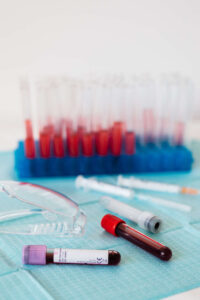
A follow up visit with Dr. Wall proved I was getting healthier. My blood work showed cholesterol was well-below normal and my blood pressure was starting to come in (too) low (I would feel a little light-headed after a good workout). He reduced the doses of the meds for blood pressure and cholesterol. The liver enzymes that were always elevated came into the normal range – meaning I avoided a liver biopsy. I couldn’t eliminate the drugs (yet), but I was now on the lowest doses of them. My blood sugar was also in the normal range, meaning I was no longer pre-diabetic.
Dr. Wall told me if I lost another 10 pounds, he’d stop talking to me about my weight. That was a challenge I accepted!

If you read a few weight-loss stories, they almost always talk about hitting a plateau. The plateau happens when you simply stop losing weight no matter what you seem to do. A plateau is completely driven by the laws of physics. You keep working out, but the weight no longer drops. Why is that??
The answer almost seems like a cruel joke. When I was 285 pounds, it took a lot of energy to walk on that treadmill for 45 minutes. Especially when I elevated it. After my weight dropped by 60 pounds, it took less energy to do the same workout. It’s as simple as that – less energy use meant I didn’t need to burn up fat cells to provide workout energy. Which meant the remaining fat cells stayed put – in other words, a plateau.
Said a little differently, my body was 60 pounds lighter than it was a few months earlier. I continued to do the same workout –briskly walking on a treadmill for 45 minutes. But now it took less calories to complete that workout than it did 60 pounds ago. At this point, my daily calorie intake from food and drink and my daily calorie expenditure were balanced for a weight of about 225 pounds. Continuing to do a similar workout every day and continuing to eat the same number of calories each day meant I had hit the plateau. I increased the time I walked, but that had a miniscule effect on my weight.
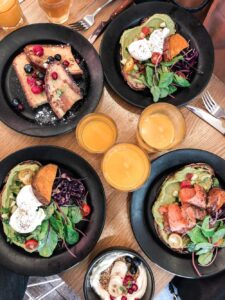
Hitting the plateau meant that something had to change to hit my target weight. I either needed to significantly ramp up my workout durations, change our diet, or both. I really didn’t have time to double my workout times, and to be honest that didn’t seem like a lot of fun. So, Sandy and I tackled our nutrition.
We traded our fried and processed foods for fruits and vegetables. We transitioned from fatty cuts of meat to leaner cuts like pork loin and chicken. We eliminated many of the processed snacks from the house – Oreos, crackers, and the like. We focused on a healthy balance of the macronutrients – carbs, protein, and healthy fats.
Was this an easy transition? Not at all! In fact, it was harder than starting the workouts. But the payoff was a higher energy level, the loss of another 15 pounds, and another lowering of cholesterol. In fact, I was finally able to drop the cholesterol med!
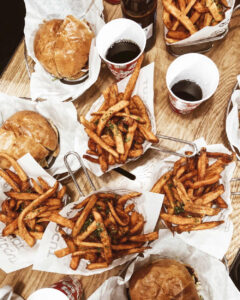
Nutritional setbacks seem to happen more frequently than that others. I don’t know why, but you see healthy looking fit people eating crappy food all the time in restaurants. You know by looking at them that this specific unhealthy meal isn’t their norm. So yes, it’s a nutritional setback that you enjoy now – it’s just part of life. But you know you can’t always eat this way (thinking pizza and fried calamari) if you want to be healthy. It’s really that simple.
I fall off the healthy diet bandwagon about once a week. But I don’t let that one pizza turn into a week of poor eating choices. I could continue to gorge on pizzas, or I could tell myself that was a nice diversion, but it’s time to get back to our healthy diet. When I start arguing with myself, I start thinking how stuffed and lethargic I felt after gorging on pizza, but how energized I feel after eating our typical healthy meals. Yes, the pizza tasted good, but the longer-term effects were being uncomfortable and lethargic. I’ve learned that sticking to our normal meals still tasted good and had longer term benefits like higher energy levels and alertness.
Nutrition setbacks are relatively simple setbacks to manage – we made sure one weekend of fun and food didn’t turn into a week, and then a month.
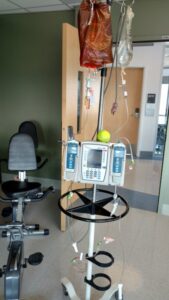
The diagnosis was indeed non-Hodgkin lymphoma, stage 4. I had lymphoma masses in my liver, pancreas, and smaller masses in and around my heart.
Fortunately, the head doctor for lymphoma treatment and research at Rush heard about my case and took me on. After a series of tests, I started chemotherapy.
Chemo is a treatment that kills cells in our bodies. You just hope it kills all the cancer cells before it kills you. It works well with aggressive cancers, because the cancer cells suck up more of the chemicals than our regular cells. They are the proverbial “pigs at the trough,” sucking up the poison and killing themselves. There are other fast growing cells in our bodies, such as hair follicles and the lining of our mouths. Unfortunately, they also suck up the chemicals and die. They’re collateral damage from chemo. And of course, our bone marrow is severely damaged as well by chemo. And that leads to low red and white blood cell counts, and platelet counts.
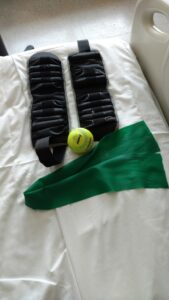
Rush has a complete floor with private rooms dedicated to this type of treatment. Sandy, bless her heart, slept on a plastic couch in my room. They had an exercise bike that I used daily. I walked laps in the hall with ankle weights. The resistant band was for my arms and shoulder. The soft-covered baseball – well, that was just for fun. I kept trying to exercise around the treatments.
During the two weeks of “recovery” between treatments, I would walk several miles a day. I quickly realized that taekwondo practices were not going to happen. Something as simple as walking up a flight of stairs left me gasping for breath because of low red blood cell counts. At one point I needed a transfusion. But I kept walking – that was about the only thing I could manage.
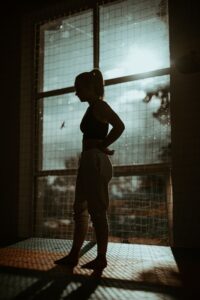
In May 2017, six months after starting chemo, it was over. CT scans showed no signs of cancer. That was, of course, great news! But at the same time, my body was ravaged by the chemo war that was waged against the cancer cells. My blood counts were in the dirt. Endurance was non-existent. I had lost about 20 pounds, but somehow my pants were a little tighter around my waist. The only way that is possible is if I lost a bunch of hard-earned muscle mass and gained some fat. That was a little (maybe a lot) depressing!
I went to physical therapy three days a week for another 4 months. They helped me heal my left shoulder and start the muscle healing process. They helped me gain endurance, which I had completely lost. And finally, I was able to re-start taekwondo training (I set a goal of being able to run three miles first – it was a slow three miles).
Training to get to the 3-mile mark was daunting. It took a lot of perseverance to get up each morning and try to work a little harder than I did the day before. But I kept at it. Throughout all of this, I had an excellent supporting cast – Sandy and our two daughters, Carrie and Emma. They wouldn’t let me camp out on the couch. One of our daughters would call me daily to make sure I was doing something.
That was three years ago. Today, I’m healthy and there’s no sign of cancer returning. The left shoulder muscles will never be the same, but I haven’t found anything I can’t do. The real achievement was making it to not only the state taekwondo championships, but also the national championships in 2019. I came away with gold and silver medals from each competition. I fully planned and trained to bring home all gold in 2020, but unless you’ve been under a rock, you know how that turned out…